Warning: Undefined variable $composer_id in /var/www/megapower.co/html/wp-content/themes/Twenty-Twenty-Four-Child/functions.php on line 918 The Hall of the Mountain King – The Music Realm
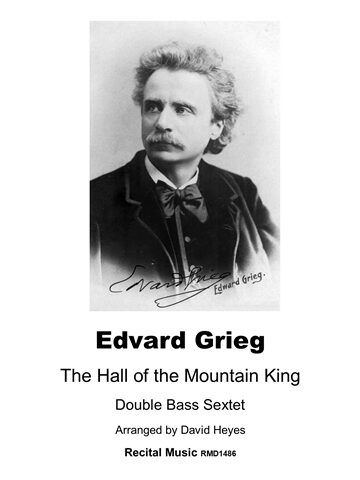
Edvard Hagerup Grieg was a Norwegian composer and pianist born on June 15, 1843, in Bergen, Norway. He is widely considered one of the leading Romantic era composers, and his music is part of the standard classical repertoire worldwide. Grieg’s use of Norwegian folk music in his compositions brought the music of Norway to fame and helped develop a national identity, much like Jean Sibelius did in Finland and Bedřich Smetana in Bohemia.
Grieg was raised in a musical family; his mother was his first piano teacher and taught him to play when he was aged six. He studied in several schools, including Tanks Upper Secondary School. During the summer of 1858, Grieg met the eminent Norwegian violinist Ole Bull, who recognized the boy’s talent and persuaded his parents to send him to the Leipzig Conservatory.
Grieg’s later years were marked by his establishment of a home called “Troldhaugen” near Bergen, where he spent much of his time composing. He made several tours in Scandinavia, on the Continent, and in England, playing his piano concerto in London in 18882. Grieg passed away on September 4, 1907, in Bergen.
Originally composed as incidental music to Ibsen’s play Peer Gynt, and subsequently included in Suite No.1 Op.45, The Hall of the Mountain King is one…
Originally composed as incidental music to Ibsen’s play Peer Gynt, and subsequently included in Suite No.1 Op.45, The Hall of the Mountain King is one of Grieg’s most instantly recognisable works. The piece begins simply and quietly, gradually building to a magnificent and monumental climax, and a strong sense of pace and atmosphere is needed for a successful performance.
The Hall of the Mountain King can be performed by double bass sextet or larger forces with optional percussion. It was arranged for an octet concert at the St. Claud Festival (Charente, France) in July 2007, and to commemorate the 100th anniversary of Grieg’s death in 1907.